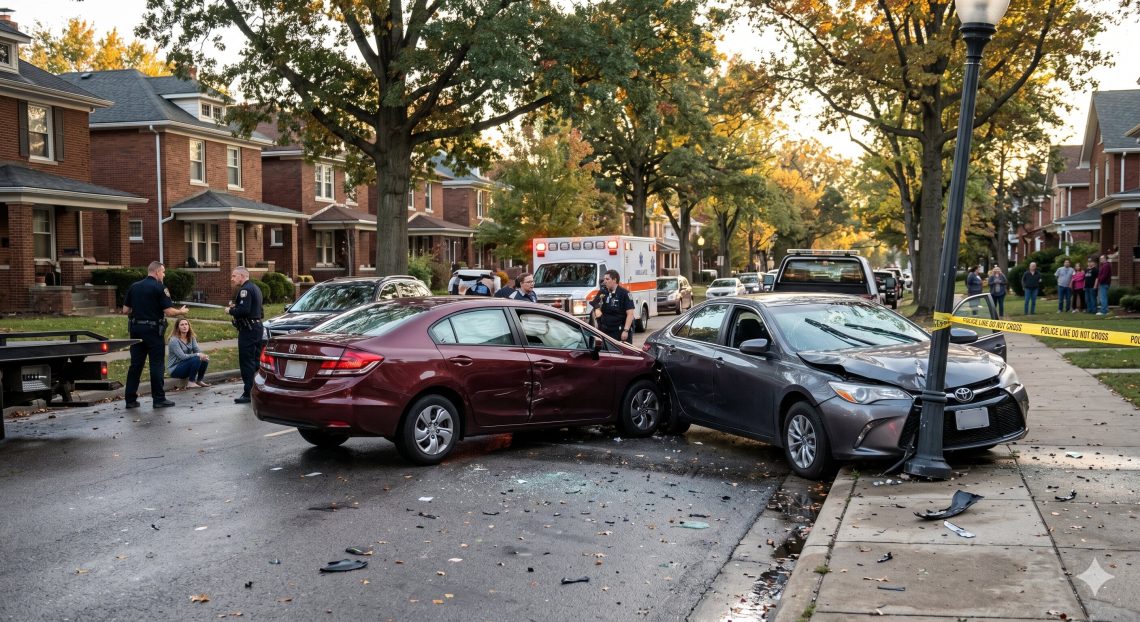
What to Do After Witnessing a Car Accident
The stunning sound of crunching metal and shattering glass is something you never forget. Whether you’re driving through the Roundabouts of Bend or cruising down Highway 97, witnessing a car accident is a high-stress experience. While your adrenaline may be spiking, your actions in the minutes after a crash can be life-saving for victims and vital to subsequent legal and insurance processes.
If you find yourself as a witness to a collision, follow these essential steps to stay safe and provide help effectively.

1. Prioritize Your Own Safety
Before you can help anyone else, you must ensure you aren’t becoming the next victim. Pull your vehicle over to a safe location, well away from the crash site and active traffic.
- Turn on your hazard lights immediately.
- If it’s dark or visibility is low, use flares or reflective triangles if you have them in your emergency kit.
- Check your surroundings for downed power lines, leaking fluids, or broken glass before exiting your vehicle.
2. Call 911 Immediately
Never assume someone else has already called. Even if the accident looks minor, professional medical and police intervention is necessary. When you speak to the dispatcher, provide:
- Your exact location (use landmarks or cross-streets).
- The number of vehicles involved.
- A brief description of any visible injuries.
3. Offer Help, but Use Caution
If it is safe to approach the vehicles,Distracted Driving: How to Avoid It in 2026 check on the occupants.
- Do not move injured persons unless there is an immediate threat of fire or explosion. Moving someone with a neck or spinal injury can cause permanent damage.
- Offer comfort and let them know help is on the way. Sometimes, just having a calm voice nearby can prevent a victim from going into shock.
4. Document the Scene
As a witness, you are a neutral third party, and your perspective is incredibly valuable. Once the scene is stable, use your phone to capture the “raw” state of the accident:
- Take photos of the vehicle positions, license plates, and road conditions.
- Note the weather, the time of day, and any traffic signals that were active.
- Stick to the facts. Avoid speculating on who was at fault or how fast someone was going; simply Oregon record what you saw.
5. Give Your Statement
Stay at the scene until the police arrive. Provide them with your contact information and a factual account of the events. This documentation is crucial for insurance adjusters and legal teams to accurately reconstruct the event.

Protecting Your Own Journey
Witnessing an accident is a sobering reminder of how quickly things can change on the road. It’s also a perfect time to ask yourself: If I were the one in that collision, would my coverage be enough to protect my family and my assets?
At the Howard Steele Agency in Bend, Oregon, we believe that insurance is more than just a policy—it’s peace of mind. As a local agency, we understand the specific risks of driving in Central Oregon, from icy winter roads to high-traffic summer weekends. Whether you need auto, home, or life insurance, our team is dedicated to finding you the best coverage at the most affordable rates.
Don’t wait for an accident to find out if you’re covered. Contact the Howard Steele Agency today at (541) 318-8835 or visit us online to get a personalized quote. Let us help you stay protected so you can focus on the road ahead.

